
After the Storm
Spring brings longer days, climbing temperatures and fresh fields of flowers — but the season can also bring powerful storms to the region. High winds, heavy rain and saturated soil put even the healthiest trees under stress, potentially leading to broken limbs, split trunks or even toppling entire trees. Knowing what to look for after a storm passes and how to respond safely can protect both your property and your family.
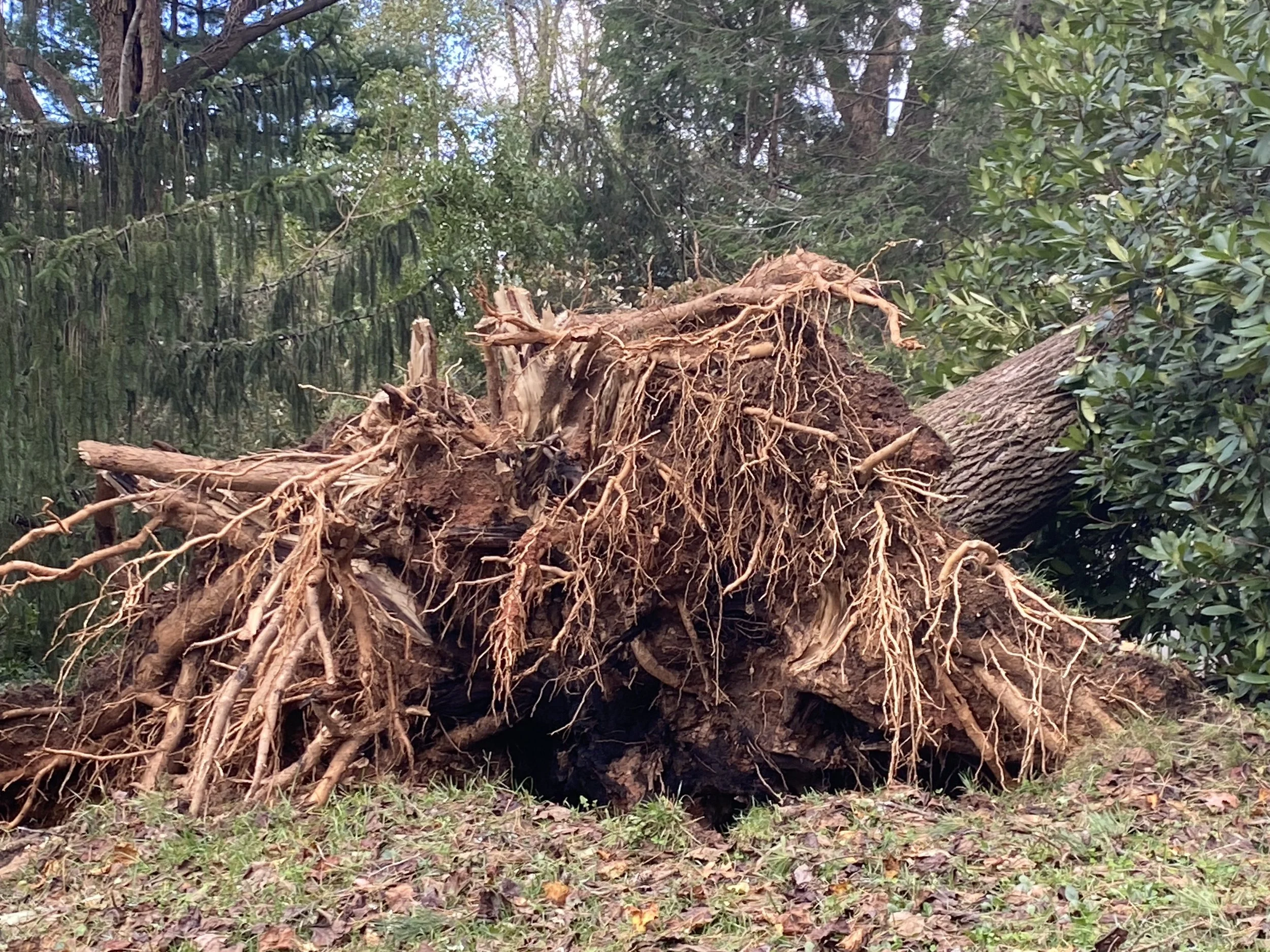
So, what happens to trees during storms? When the ground becomes waterlogged, roots can lose their grip, making trees more prone to leaning or falling. Strong winds target the canopy, especially with trees that have just leafed out — acting like a sail. At the same time, rapid spring growth can mean softer, more flexible trunk and branch structures that are more prone to collapse during strong wind events.
Even if everything looks fine at first glance, storm damage isn’t always obvious. A tree may have hidden structural issues that can show up days or even weeks later.
After a spring storm, it’s a good idea to take a careful walk around your property and look for post-storm red flags. Hanging or broken limbs caught in the canopy, fresh cracks or splits in the trunk or major branches, and leaning trees with lifted or disturbed soil at the base are all signs of potential damage. Any of these can be signs that a tree may be compromised and could pose a risk if left unaddressed.
Of course, safety should always come first. Storm-damaged trees can be unpredictable and dangerous. It’s important to resist the urge to tackle cleanup on your own, especially in high-risk situations. Here are some tips on handling potential storm damage:
If a tree is blocking a public road or has fallen onto power lines, call 911 immediately. These situations require emergency response and coordination with utility crews.
Stay far away from downed or sagging power lines. Even if they appear inactive, assume they are live.
Keep a safe distance from damaged trees. Dangling or sagging limbs can fall without warning, and partially uprooted trees can shift suddenly.
Avoid using ladders or chainsaws unless you are properly trained — these tools are leading causes of injury in post-storm cleanup.
Remember, not all damage requires removal, but it can take a trained eye to determine the best course of action. The Smart Feller Tree Works team can assess whether a tree is damaged and can be saved through strategic pruning and support or if removal is the safest option.
Early intervention can also prevent further damage. A cracked limb today could become a failure point in the next storm if left unattended. And while you can’t prevent storms, you can reduce the risk spring storms pose to your property:
Consider scheduling routine inspections to identify weak limbs or structural issues.
Have trees pruned strategically to reduce wind resistance.
Remove dead or declining trees before they become hazards.
Keep an eye on changes to trees near your home, driveway and utility lines that could indicate structural problems or decay.
Spring storms are part of life in our region, but dealing with their aftermath doesn’t have to be overwhelming. Bringing in professionals who have the training, tools and experience to handle storm damage safely and effectively not only provides peace-of-mind, but also ensures that your property’s trees are as healthy as they can be this spring.