Life in the trees
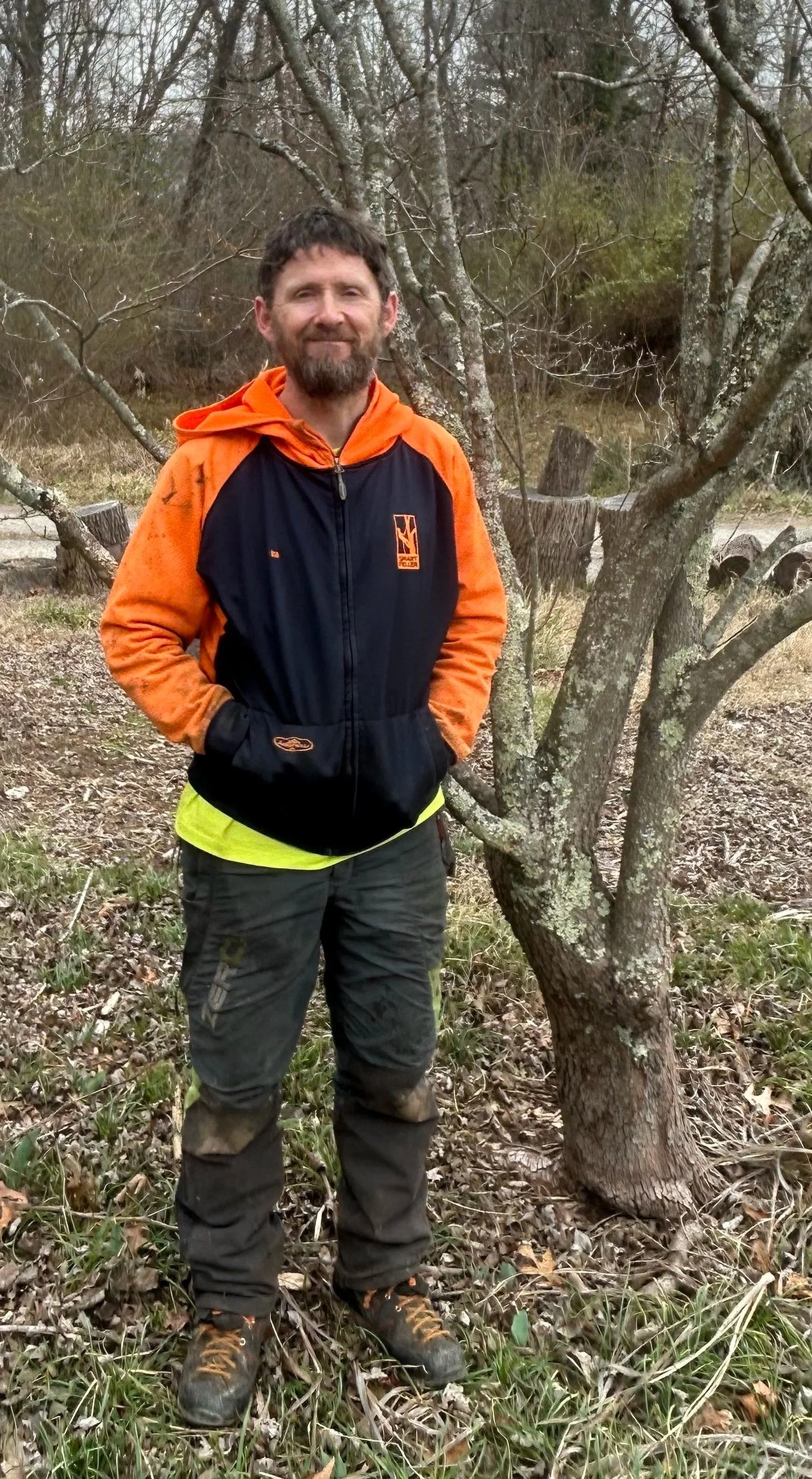
Long before he was rigging pulleys up hundred-foot tulip trees and offering science-based care to save storm-damaged oaks, Ira Friedrichs was just a kid in the woods.
“I grew up in the country, in the Shenandoah Valley in Virginia, close to a bunch of national forests,” said the founder of Smart Feller Tree Works. “Climbing trees was just a big part of growing up for me. I always really enjoyed it.”
Scaling trees soon led him to rock walls, where he grew comfortable using harnesses and ropes to navigate the world, troubleshooting problems high above the ground. “I got very comfortable and curious about working at height,” he said. “And I kind of grew up in the trades — in masonry restoration and new construction — so it got me thinking about how to use this interest and skillset.”
After working in his family’s masonry business and spending time in timber framing, Ira moved to Vermont to work with a mentor who was building a home from trees on his own land. Instead of felling trees at the base, his mentor climbed them, cut off the limbs and top piece by piece, dropping each section carefully to the ground before dropping the trunk.
“My first time climbing with a chainsaw really stuck with me,” Ira said. “That was the most exciting part — the thing that made me want to pursue this type of work.”
It was physical, technical and exhilarating. It demanded focus. “It’s like solving puzzles in three dimensions,” he continued. “And there’s a very real sense of consequences, so you have to pay attention to what you’re doing.”
After finishing the project in Vermont, Ira picked up tree removal work in the logging trade, but his deep respect for nature called him to expand beyond felling: “I wanted to learn how to take care of trees,” he said. “I started learning proper pruning and preservation techniques, like how to use cabling to prevent a tree from splitting. It was about finding solutions so I could hopefully talk people out of removing otherwise healthy trees — or save them from losing the tree later on.”
Ira moved to Asheville in 2009 and began doing small-scale tree work — “one person, one pickup truck” — and formally started Smart Feller Tree Works in 2010. In the early years, the business grew organically. Friends helped friends. Arborists traded labor on jobs. Over time, the company expanded, though Ira has intentionally kept his team to a tight-knit group of five or six.
“It’s really hard work, but it’s also super rewarding to solve problems for people in that way,” he said. “Oftentimes, if there’s any work that needs to be done off the ground, it might as well be on the moon for a lot of people. It feels great to be able to provide that help, especially in crazy scenarios like after Helene, when so many people needed help with storm damage.”
Staying true to the techniques that brought him to the trade, Ira and the Smart Feller crew lean on traditional rope climbing first and foremost, rarely using cranes or other access machinery on the job. Sometimes, this means hand-throwing the “throw ball” up into a tree — or using a five-foot slingshot to launch it over a specific set of branches 80 or 90 feet in the air.
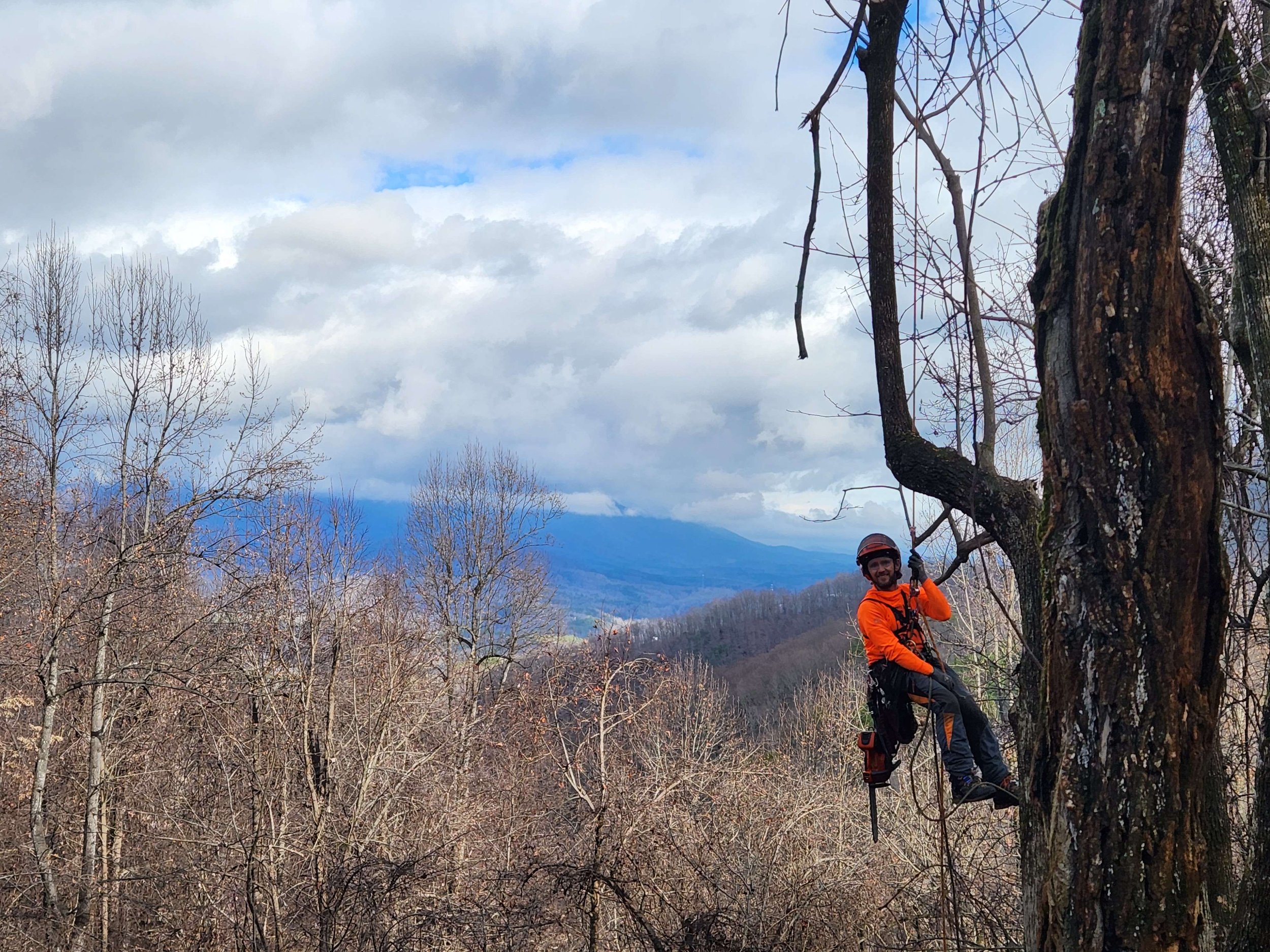
“That’s the first test of skill,” he said. “Then you install your climbing line, and from there, you’re tested by the actual physicality of the climb. Pretty routinely, we’ll do work on rope that we know other companies would use a crane or lift for. But part of the fun is relying on your own library of tools and techniques to figure out the puzzle — and watching your skillset and comfort level grow over time.”
Ira is especially proud of his adventurous team’s work-hard, play-hard mentality. “This work is challenging enough that you really have to love being outside,” he said. Even after-hours, you’ll find the Smart Feller crew outdoors — snowboarding, trail running, gravel biking, hiking.
Though, in a city like Asheville, where urban forest is abundant, arborists may have a hard time turning off their inner monologue. “Every time I walk down the street, things kind of jump right out at me,” Ira explained. “I certainly notice dead or dying trees right away, but also the little details of things done improperly that might cause a problem down the road.”
One of the most common issues he sees is mulch sitting right up against a tree’s trunk, covering the root collar where it dives beneath the soil.
“When a tree looks like a telephone pole going straight into the ground, that’s a red flag,” he said. “The root flare should be visible. That area needs to dry out. If it’s buried, the tree is much more susceptible to disease and decay.”
He also often spots hazards early — and quietly hopes the owner calls before it’s too late.
“Sometimes trees grow up with multiple stems that, as time goes on, get heavier and push against one another as they grow. Eventually, the whole thing can split in half, which is really sad because there’s often no saving it after that happens,” Ira explained. “But if you can catch the growth pattern in time, generally a dose of reduction pruning and a metal cable system can keep it together and stop it from splitting one day.”
Above all, he encourages people to spend time in their own yards and beyond. Loosely quoting biologist Alex Shigo, whose words have inspired generations of arborists, Ira included: “Remember to touch trees. Sit in their shade. Keep an eye on them. The more active you can be walking around your landscape and noticing things, the better.”
And sometimes, that noticing means looking up. Whether you’re evaluating a tree from the ground or suspended high in the canopy, the method is the same: Pay attention, understand what you’re seeing and give these living giants the thoughtful care they deserve.