Lessons from Abroad
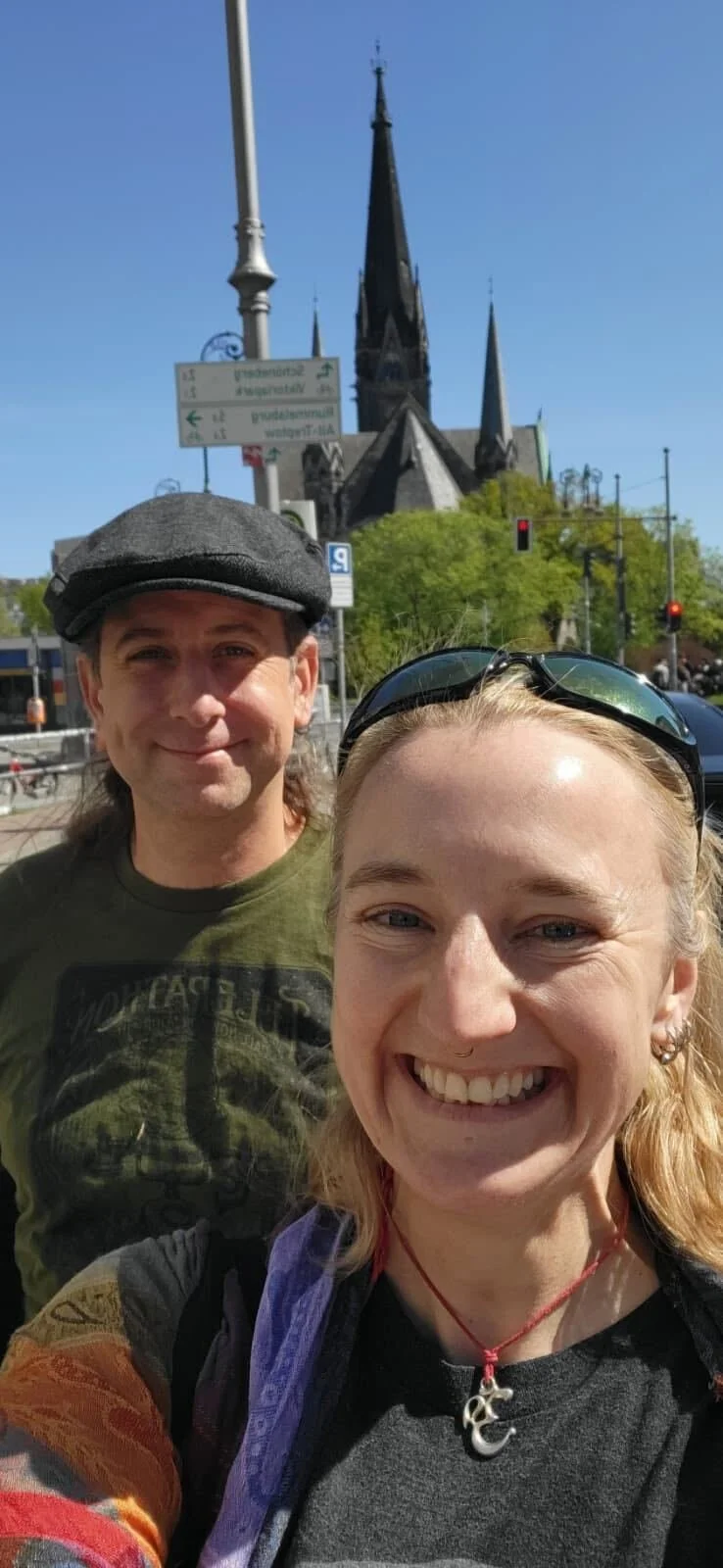
Gerlinde and her husband, Ed, toured the streets of Berlin earlier this spring.
Gerlinde Gentzke didn't go to Berlin to study urban forestry. She went to dance.
What she unexpectedly came home with, however, was a notebook full of tree care ideas.
Part of the Smart Feller team since 2020, Gerlinde found inspiration on the streets of Berlin — a city that was completely leveled 80 years ago and remained divided until her own lifetime.
"They took the rubble of their absolutely devastated city and turned it into something beautiful — creating parks, planting trees — with so much thought and effort put into making green spaces last long into the future," she said.
What struck her wasn't just the greenness of the city, though that was immediately apparent. It was the philosophy embedded in how the city treats its trees, its animals, its soil, its water — and its people. "It’s this mentality that if everything in our city is not flourishing, we are not flourishing," she added.
For arborists in Asheville, tree protection zones have become a recurring and somewhat frustrating topic. At its most basic, protection zones provide a barrier that shields a tree and its root system from construction damage. These simple structures are widely understood to be one of the most important tools for preserving mature urban trees.
The City of Asheville is currently developing an Urban Forest Master Plan, and when arborists from across Western North Carolina were brought together to identify the greatest need, the answer was unanimous: protect mature, established trees.
The problem, as Gerlinde has heard over and over again, is that there isn’t room in the budget to protect the city’s trees.
Her experience of Berlin, however, has made that argument hard to sustain.
"Every single little tree in the city has a protection support system on it," she explained. The materials? Bits of corrugated plastic, old drainage pipes, wrapped around the trunk with simple boards placed around it to form a protective box. The boards keep pressure off the trunk, the piping protects the bark, and together they shield the root zone from foot traffic and equipment. "It's a really simple fix, easy to construct, and it repurposes materials that otherwise would end up in a landfill."
There’s no reason we can’t do the same, she added.
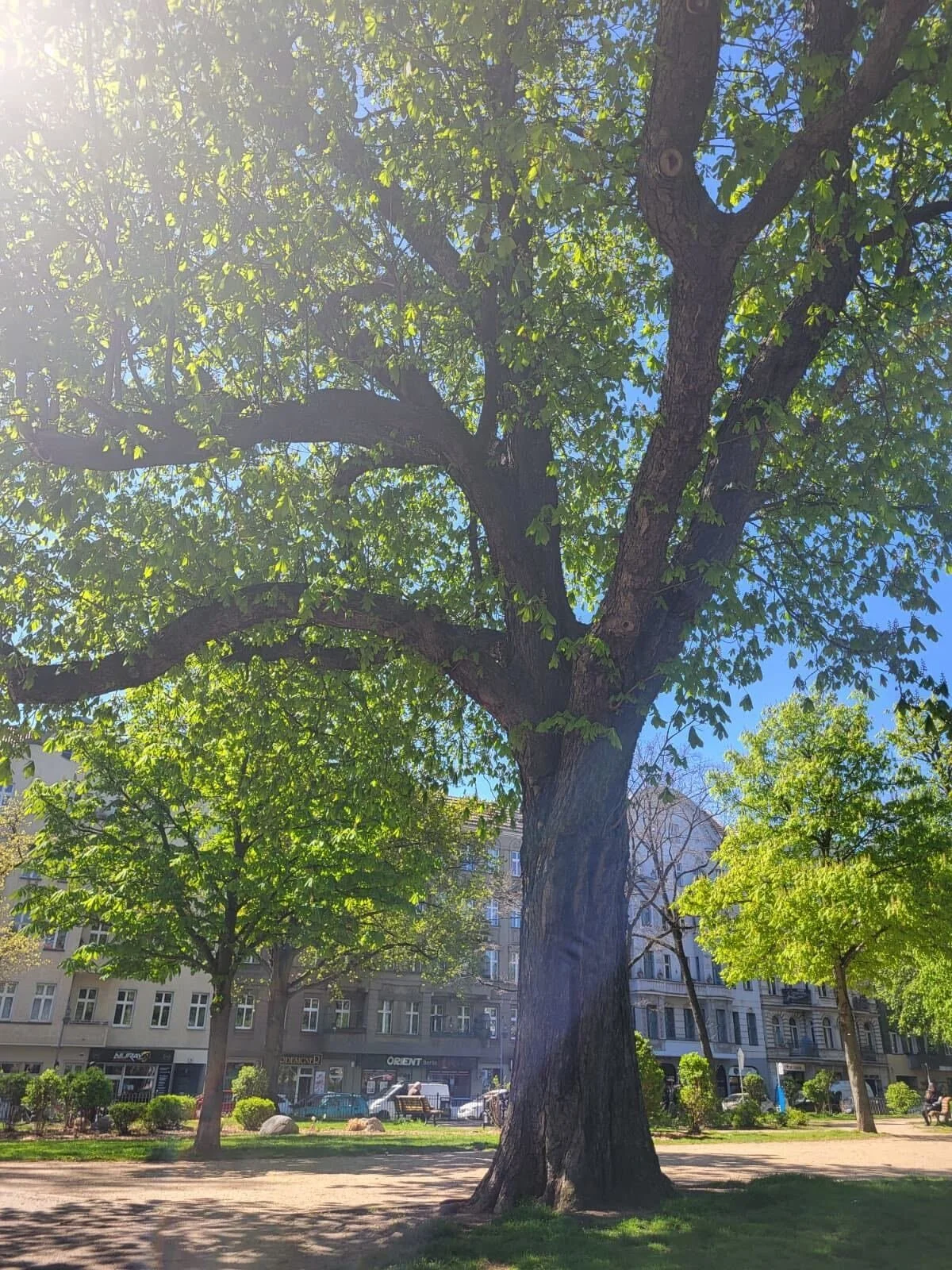
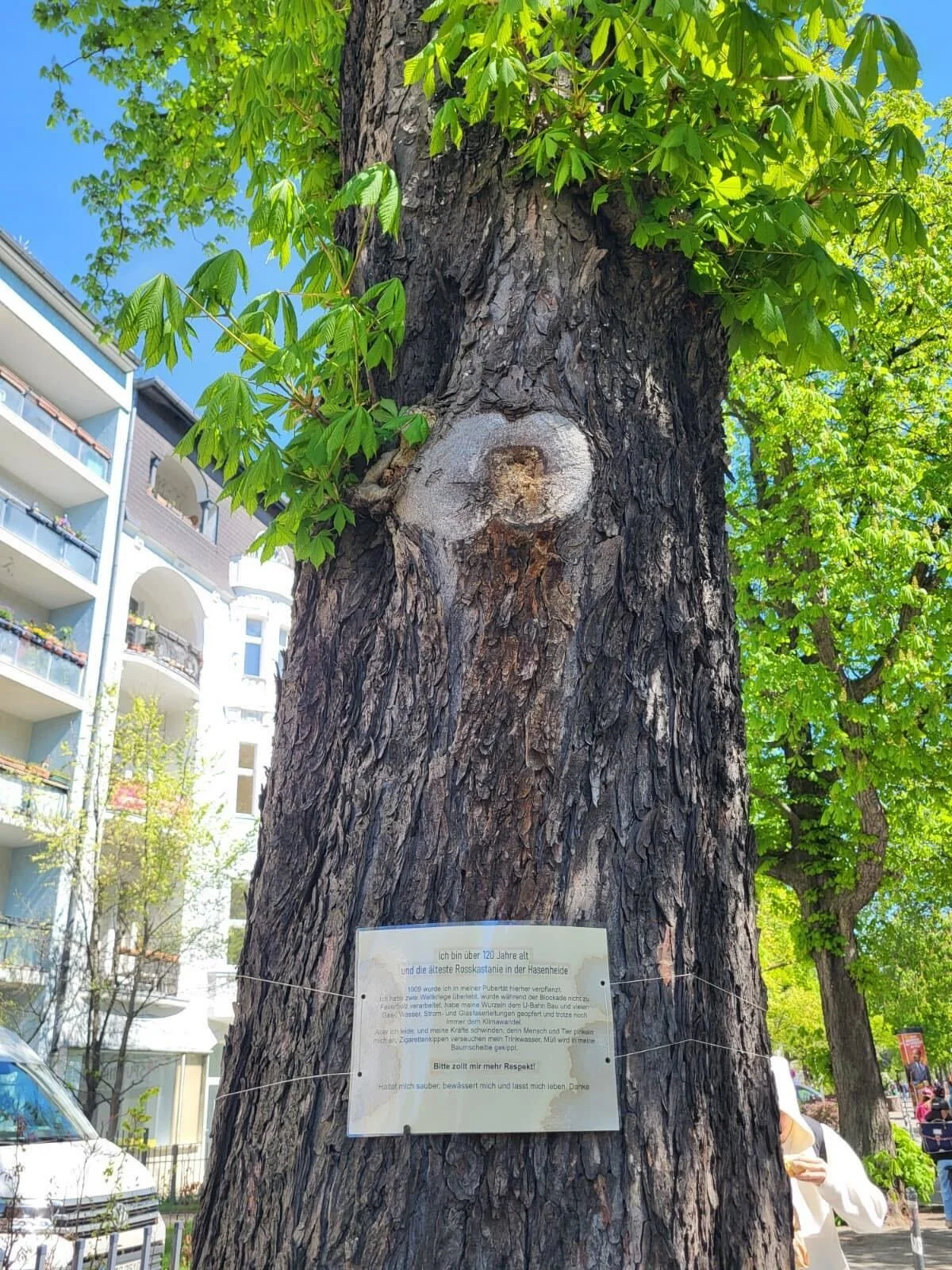
In a small sidewalk cutout in the middle of the city, surrounded by a simple two-by-four protection frame, stands a large, healthy horse chestnut tree. A plaque on it reads:
“I am over 120 years old and the oldest horse chestnut tree in Hasenheide. In 1909, I was planted in my youth. I survived two world wars, was not cut down during the Berlin Blockade, but had to sacrifice my roots for gas, water, subway construction and many gas, water, electricity and fiber optic lines, and still suffer more and more from climate change.
“But I suffer and my strength is fading because people and animals urinate on me. Cigarette butts poison my drinking water, and trash is dumped around me. Please show me some respect. Keep me clean, water me and let me live. Thank you.”
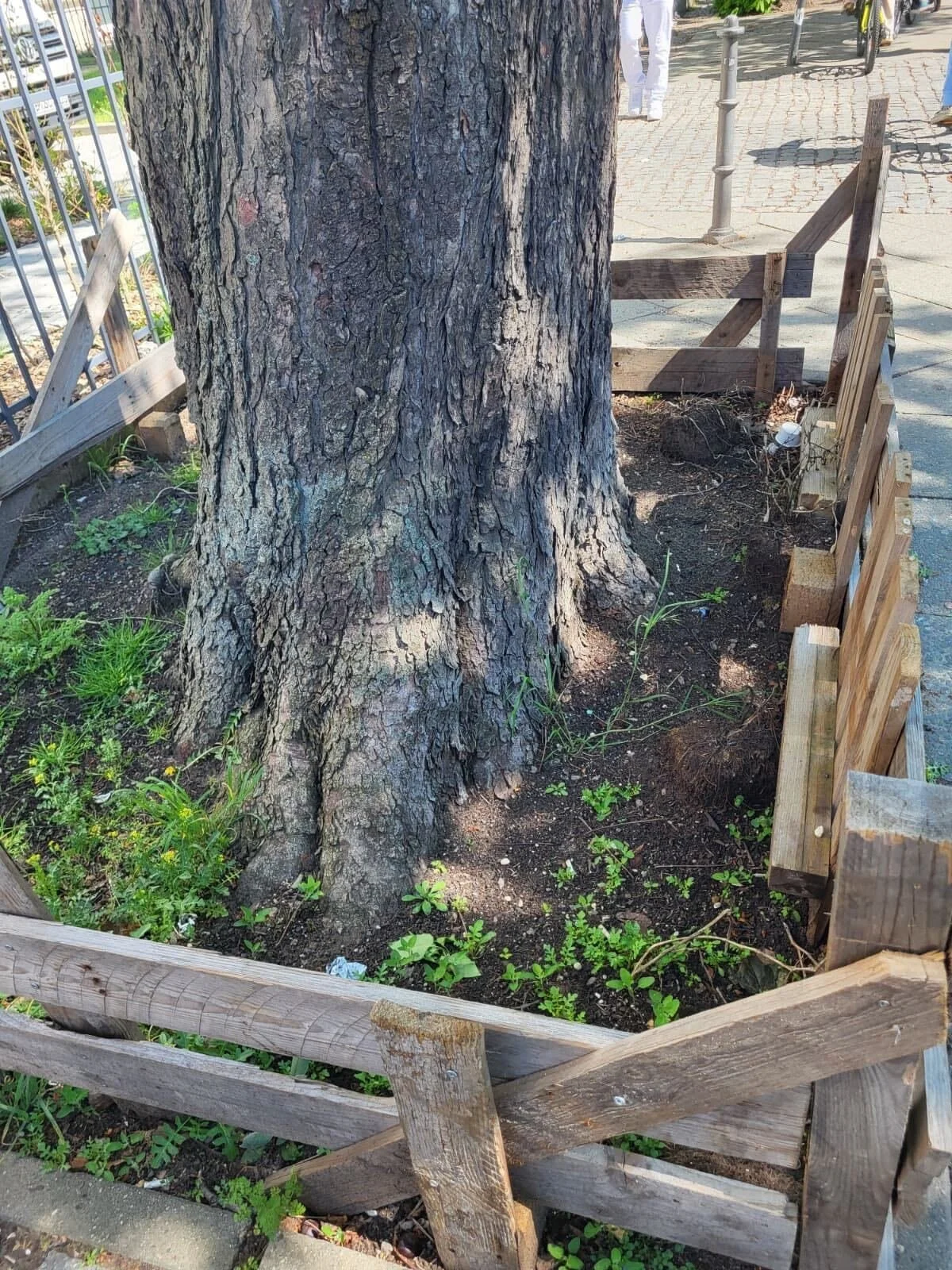
A 120-year-old horse chestnut in the middle of the city is protected by a simple wooden frame.
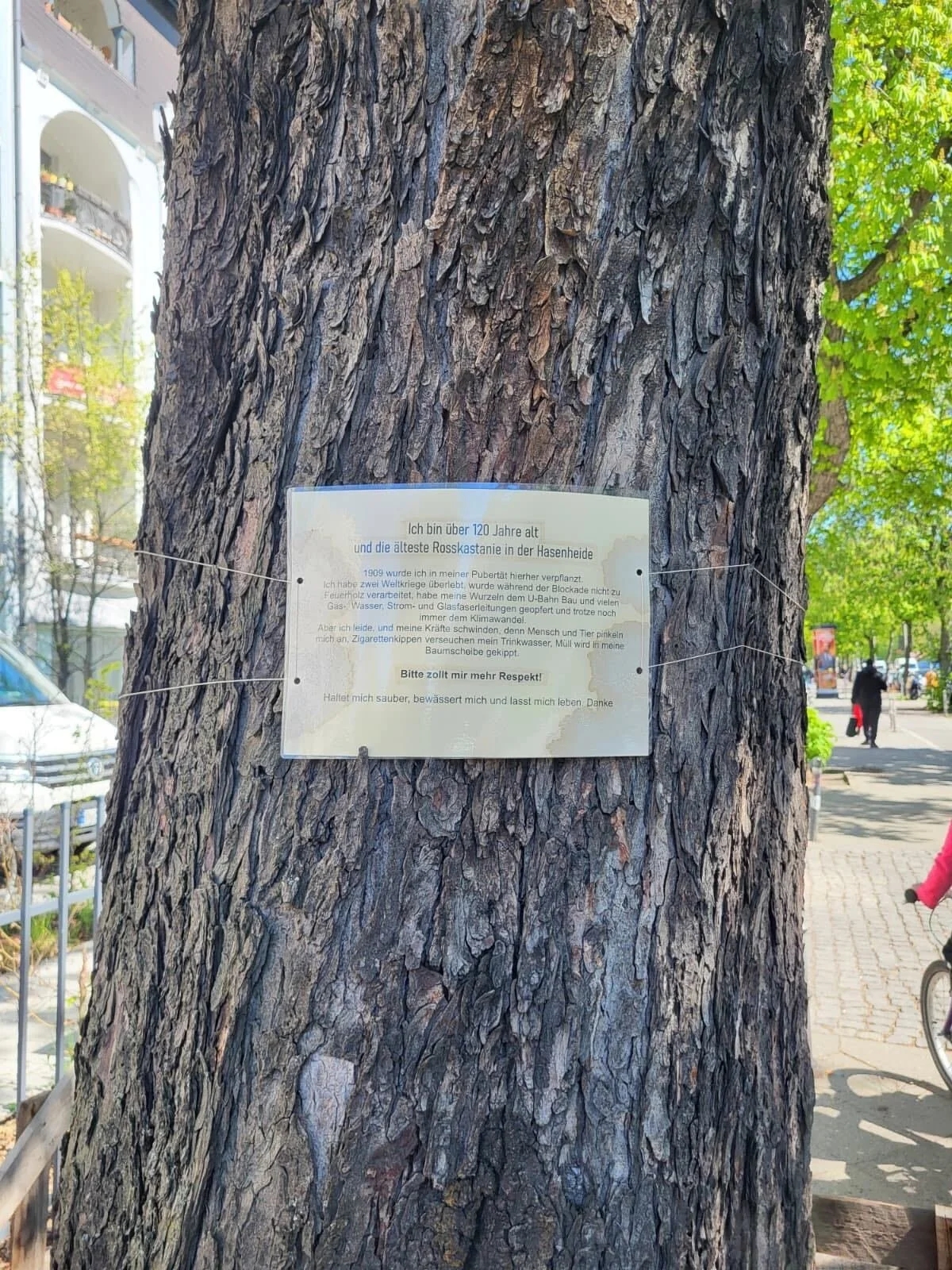
The sign imploring passersby to respect the tree is loosely tied to its trunk with care for its health.
It's a small gesture for the city, but it conveys a powerful message to all who pass by: This tree is not an object. It is a living thing with a history longer than the vast majority of those who enjoy the shade of its branches. It has survived things we cannot imagine. And it is asking for something very simple in return.
Gerlinde knows of several trees in Asheville that could use a sign like that. One of them, near her home in Candler, is a massive, mature white oak tree that survived Hurricane Helene, bears the marks of a lightning strike and recently had its root zone bulldozed during the construction of an adjacent apartment complex. "It's an absolute giant," she said. "When I saw them working in the root zone, I walked up and told the construction crew: This tree is really special; try to be gentle around it."
They agreed to do their best to prevent any further harm. But without legislation to protect our community’s oldest trees, there’s nothing stopping them — or anyone — from causing irreversible damage to these living giants.
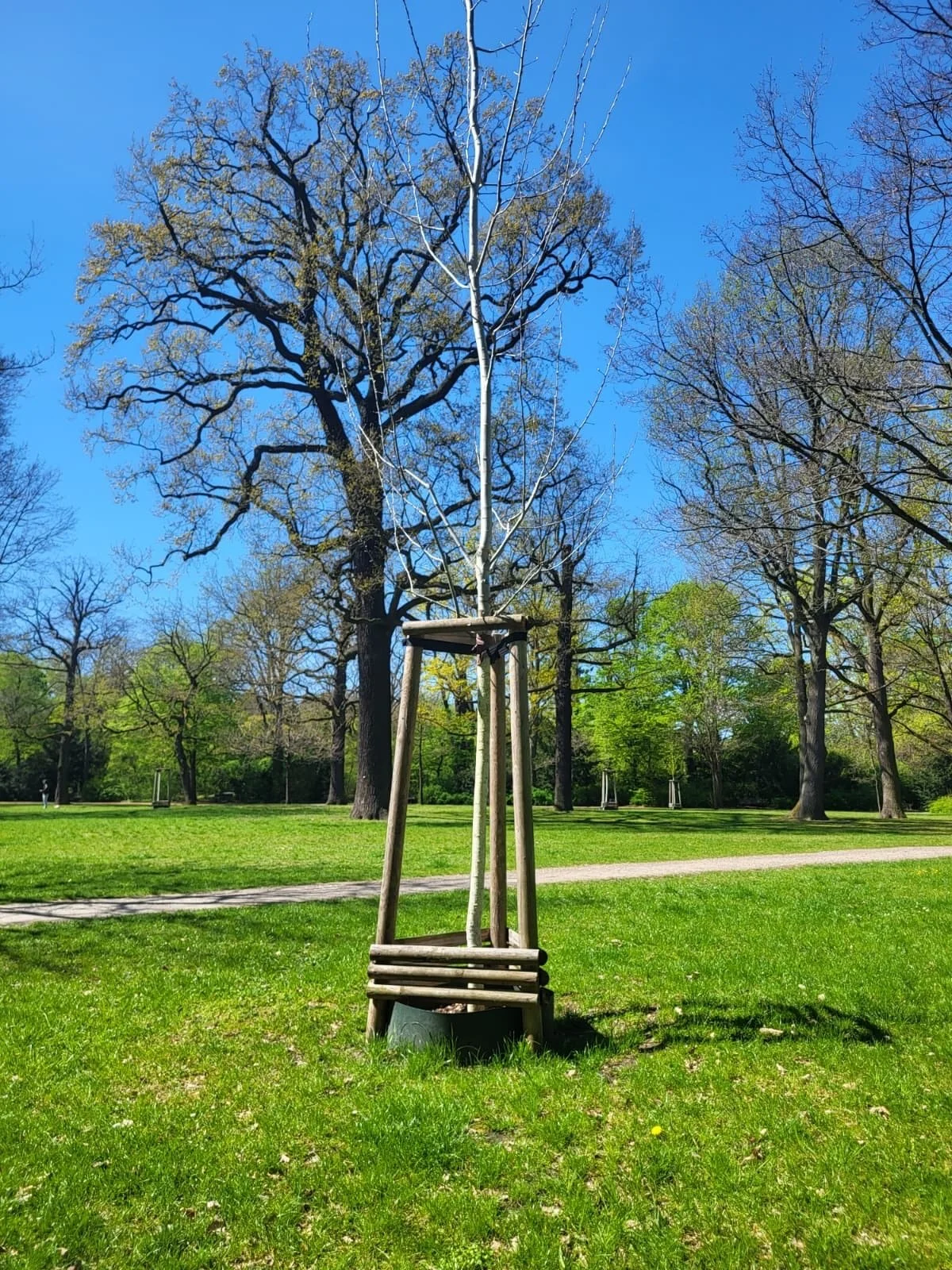
Young trees around Berlin are protected by simple support structures like these, made from recycled materials.
Gerlinde came home from Berlin re-inspired about her work with Smart Feller. She and her colleagues already do much of what she observed overseas: creating tree protection zones, proper mulching, keeping organic material on-site — these aren't foreign concepts to the team.
The gap isn't knowledge; it's culture and legislation. The practices arborists have long advocated for are not idealistic or impractical. They exist. They're being used. And they work.
North Carolina currently has no state-level protections for mature trees, and the balance of power has historically favored development interests. But Asheville's Urban Forest Master Plan represents an opening, and Gerlinde wants residents to use it. "I would love to rally citizens to just voice that we want legislation to protect mature trees," she said. The process requires showing up — to meetings, to votes, to conversations with neighbors and developers alike.
For homeowners, the asks are smaller and more immediate: leave your leaf litter where it falls. Resist the urge to "clean up" the forest floor. Water your street trees during dry spells. And if you're planning any construction near a significant tree, call an arborist before the first shovel goes in.
These are not complicated things. A city that was leveled and rebuilt figured it out. “And so can we,” she said.